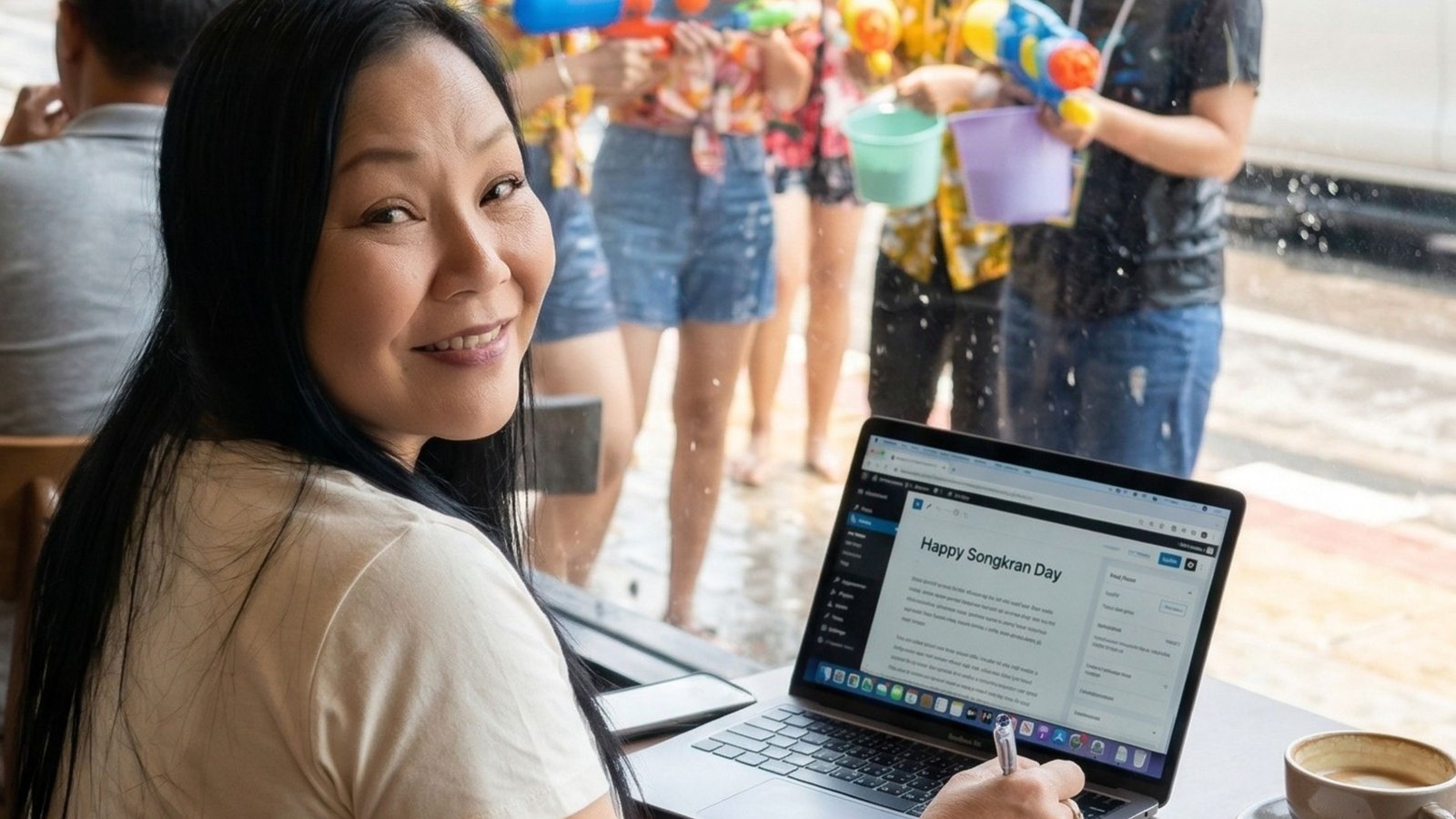
Every year in mid-April, the streets of Thailand come alive with laughter, splashes of water, and a joyful sense of celebration. For many people around the world, Songkran is known simply as Thailand’s famous “water festival”. Images of people carrying water guns, laughing in the streets, and soaking one another from head to toe have become widely shared across social media.
But if you look a little deeper, Songkran is much more than a giant water fight.
Behind the laughter, the splashes, and the lively streets lies a tradition that carries centuries of cultural and spiritual meaning. What may appear at first as simple fun is actually rooted in ideas of renewal, respect, and beginning again.
For many people in Thailand, Songkran is a moment that invites both celebration and reflection. It marks a transition — a gentle turning point in the year where people pause, reconnect with family, and symbolically wash away the burdens of the past.
The water that fills the streets during the festivals is not only playful. Traditionally, it represent purification and blessings for the year ahead. Each splash echoes an older ritual, one that speaks of cleansing the mind and heart, letting go of misfortune, and welcoming a fresh start.
Seen this way, the festival becomes something more meaningful than it first appears. It becomes a reminder that sometimes the most joyful traditions also carry the deepest wisdom.
The Spiritual Meaning of Water
Across many cultures, water has long been seen as a symbol of purification, renewal, and transformation. It has the power to wash away what is old and make space for something new. In spiritual traditions around the world, water often represents the quiet process of letting go — releasing burdens, regrets, and the emotional weight we carry.
This symbolism is deeply present during Songkran.
When water is poured gently over a Buddha statue, it is not only an act of respect. It also reflects the intention to cleanse the mind and heart — to step into the new year with clarity and compassion.
In many temples across Thailand, people approach this ritual slowly and mindfully. The act itself is simple, but the meaning behind it is profound. As the water flow, it symbolically carries away the worries and misfortunes of the past year.
Water, in this sense, becomes a quiet reminder that renewal does not always come from dramatic change. Sometimes it comes from something much softer — the willingness to release what we no longer need and allow life to begin again.
Perhaps this is why water feels like the perfect symbol for the Thai New Year. Just as flowing water never stays still, life itself is always moving forward. Rivers continue their journey no matter what lies in their path — sometimes calm and gentle, sometimes fast and unpredictable — but always adapting to the shape of the land and the rhythm of the earth.
In much the same way, our lives move through seasons of change. We cannot return to the exact moment that has passed, but we can choose how we move with the current, carrying the lessons of the past while allowing new experiences to unfold.
Seen in this way, Songkran becomes more than a celebration of the new year. It becomes a reminder that no matter what the past year has carried with it; the possibility of a fresh beginning is always within reach.
And like many meaningful beginnings, it does not start with loud celebration, but with something quieter first — reflection.
Songkran invites people to pause and look back on the year that has passed: the lessons learned, the challenges faced, and the experiences that have shaped the journey so far. Only by acknowledging what has been can we truly prepare ourselves to step into what comes next.
A New Year That Begins with Reflection
A new year is never just a change of date. It is a quiet invitation to pause — to step back from the movement of daily life and to gently take stock of where we are.
In Thai culture, the New Year is not only about celebration. It is also a time for reflection. People pause to think about the year that has passed — the lesson learned, the challenges faces, and what they are ready to let go of.
But this act of reflection is not only about looking back. It also holds space for looking forward.
In many ways, it becomes a moment where the past and the future meet. People gently acknowledge what has shaped them, while also considering what they want to carry into the year ahead — the kind of life they hope to create, and the direction they wish to move toward.
This pause is often missing in everyday life. We move quickly from one responsibility to the next, focusing on what needs to be done, rarely stopping to notice how much we are actually carrying. Over time, this constant movement can make it difficult to hear ourselves clearly.
That is why reflection matters.
It creates space to breathe. It helps us recognise what has been weighing on us, what we have outgrown, and what still feels meaningful. It allows us to separate what belongs to the past from what is ready to grow with us into the future.
Without this pause, we risk moving forward without awareness — repeating patterns, holding onto what no longer serves us, and losing touch with what truly matters.
But when we do pause, even briefly, something shifts. We begin to see our lives with more clarity. Not just what has happened, but how it has shaped us. Not just where we are going, but how we want to move forward.
It is in this space of awareness that renewal begins.
And before the energy of celebration fills the streets of Thailand during Songkran, there is a quieter moment that often goes unseen — a moment of stillness.
And it is this stillness that the new year truly begins. Not with noise or movement, but with understanding.
A Time to Honour Family and Elders
While water symbolises spiritual renewal, Songkran is also deeply rooted in family traditions. For many people in Thailand, this time of year is one of the most important opportunities to return home. With several days of public holiday, families gather together, often travelling long distances to reconnect with parents, grandparents, and relatives they may not have seen for months.
Homes are cleaned and prepared in advance, not only in a practical sense, but also as a symbolic gesture — a way of welcoming fresh energy and a new beginning into shared family spaces.
One of the most meaningful traditions during Songkran is the act of showing respect to elders through a ceremony known as Rod Nam Dam Hua. In this ritual, younger family members gently pour scented water over the hands of their elders.
This gesture is simple but deeply symbolic.
It expresses gratitude for the guidance, care, and sacrifices that elders have offered throughout the years. It is a quiet moment of appreciation — often filled with warmth, humility, and sometimes emotion. In return, elders offer blessings for health, happiness, and good fortune in the year ahead.
In these moments, time feels slower. There is a sense of presence that is often missing in daily life — a chance to simply sit together, acknowledge one another, and reconnect beyond the busyness of routine.
These experiences are often quiet and intimate, far removed from the lively water celebrations that take place in the streets. Yet for many families, this is where the true heart of Songkran is felt most deeply.
It is a reminder that renewal is not only personal. It also lives in our relationships — in the gratitude we show, the forgiveness we offer, and the connections we choose to strengthen as a new year begins.
In this way, Songkran becomes not just a festival of water, but a festival of return — return to home, to family, and to the bonds that shape who we are.
A Time to Make Merit and Begin Again
Alongside family gatherings another important part of Songkran is the practice of making merit at temples. For many people in Thailand, the New Year begins not with celebration in the streets, but with a quiet visit to a temple.
Families often go together early in the morning, offering food to monks, lighting incense, and taking part in simple acts of devotion. These moments are not about ceremony for its own sakes, but about setting intention — beginning the year with a sense of calm, gratitude, and mindfulness.
At the heart of these visits is the desire to create good energy for the year ahead. People make offerings, listen to teachings, or take a few quiet moments to sit in reflection. It is a time to step away from daily distractions and reconnect with something more grounded and meaningful.
There is a quiet simplicity in these rituals. Nothing feels rushed. Everything moves with intention.
In many ways, this act of making merit reflects the same spirit found throughout Songkran — the idea of letting go of what has passed, and beginning again with a clearer mind and a lighter heart.
It is also a shared experience. Families come together in these spaces not only to pray or give offerings, but to support one another in starting the new year with positive intentions. There is a sense of unity — a reminder that renewal is something we often do together, not alone.
And from this quiet spiritual beginning, the festival gradually begins to open outward — from temples and homes, into the streets, where celebration takes on a more joyful and expressive form.
The Joy of Water and Shared Celebration
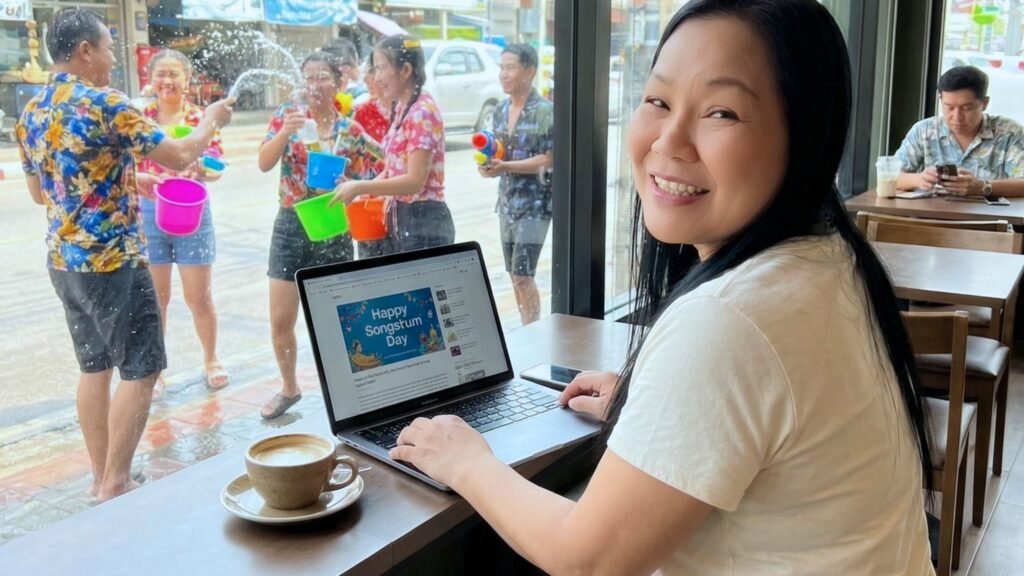
As the morning quiet slowly gives way to the rhythm of the day, Songkran begins to open outward. What starts in temples and family homes gradually flows into the streets of Thailand, where the atmosphere shifts from stillness to movement, from reflection to celebration.
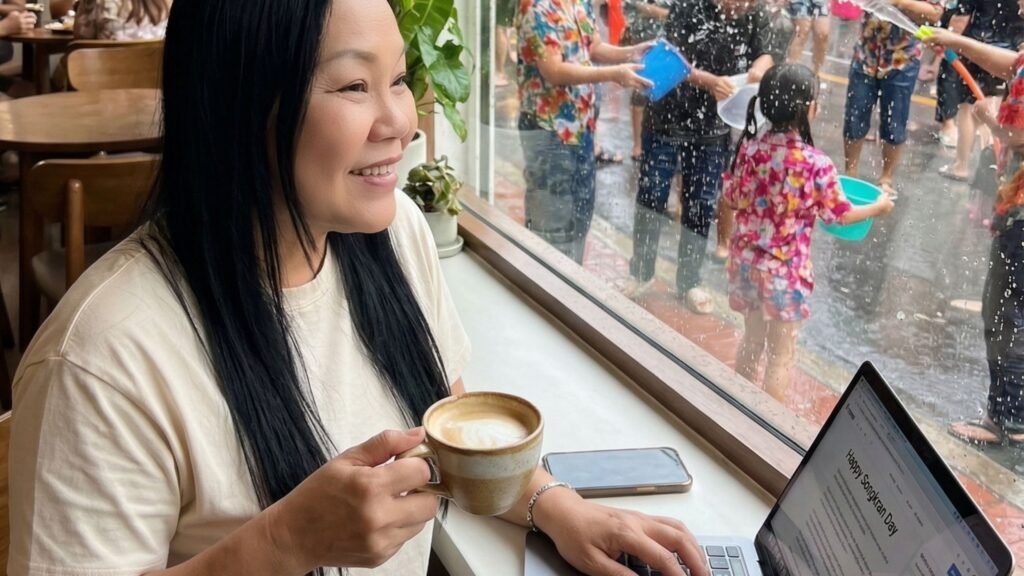
The sound of laughter begins to fill the air. Streets that were once calm become alive with colour, music, and movement. People step outside with water guns, buckets, and hoses, ready to take part in one of the most joyful expressions of the festival.
At times, ice is added to the water for a playful shock that makes everyone laugh even harder. Strangers become part of the same shared moment — no longer separated by routine or distance, but connected through something simple and universal: joy.
Yet even in its playful form, there is something deeper beneath the surface.
The water that is splashed through the streets still carries the same symbolic meaning that runs through the entire festival — a release, a renewal, a letting go of the old year to make space for what comes next.
For a few days, everyday life softens. The usual boundaries between people feel lighter. Laughter becomes the common language, and even brief encounters with stranger feel warm and human.
In this way, the celebration is not separate from the reflection that came before it — it is an extension of it.
What begins in silence, continues in connection.
What begins in letting go, becomes joy.
A Gentle Reminder of Renewal
As the energy of Songkran begins to settle, what remains is not only the memory of celebration, but something quieter and more lasting.
A reminder that life, like water, is always moving. That the past year — with all its lessons, challenges, and moments of growth — does not need to be carried in full weight into the next. Instead, it can be acknowledged, understood, and gently released.
Across Thailand, Songkran is often remembered for its joy, its colour, and its laughter. But beneath all of this, it carries a deeper message that speaks beyond culture or tradition.
It reminds us that renewal is always possible.
Not through perfection, and not through grand change, but through small, human moments — reflection, gratitude, forgiveness, and the willingness to begin again.
Sometimes renewal looks like sitting quietly with ourselves.
Sometimes it looks like returning home.
Sometimes it looks like offering respect to those who came before us.
And sometimes, it looks like standing in the street, laughing as water is gently splashed over us, feeling — even for a brief moment — completely present in life again.
Songkran gently teaches that we do not need to wait for a perfect time to start over. Every moment carries that possibility. All it takes is the willingness to let what has passed flow away… and to open ourselves to what comes next.