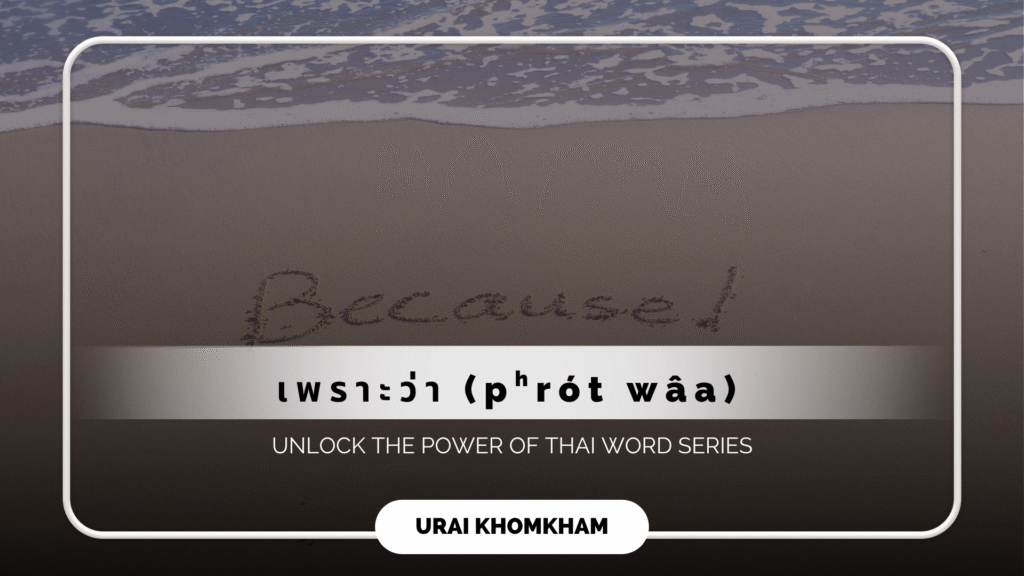
Meaning: because / because of
Part of Speech: conjunction
The conjunction เพราะว่า (phrót wâa) is used to introduce a reason or cause for an action. It functions similarly to ‘because’ in English. In spoken Thai, the shorter form เพราะ (phrót) is also commonly used, but เพราะว่า (phrót wâa) is considered more formal and complete. The basic sentence structure: result clause + เพราะว่า (phrót wâa) + reason clause. Look at the sentence examples below:
ฉันต้องไปนอนเร็วเพราะว่าพรุ่งนี้ฉันต้องตื่นนอนแต่เช้า
(chǎn dtâwng bpāi nāwn rēow phrót wâa phrûng-née chǎn dtâwng dtèun-nāwn dtàe-cháo)
I have to go to bed early because I have to wake up early tomorrow.
Literal: I have to go sleep fast because tomorrow I have to wake up early.
ฉันไม่ไปเที่ยวเพราะว่าฉันป่วย
(chǎn mâi bpāi-thîew phrót wâa chǎn bpùay)
I’m not going out because I’m sick.
Literal: I not go sightsee because I sick.
พวกเราไปถึงที่นั่นสายเพราะว่ารถติด
(phûak-rāo bpāi-thěung thêe-nân sǎai phrót wâa ród-dtìd)
We arrived there late because of traffic jam.
Literal: We go-reach place-that late because car-attached.
ฉันชอบประเทศไทยเพราะว่าอาหารอร่อย
(chǎn châwb bprà-thâed Thāi phrót wâa āa-hǎan à-hròi)
I like Thailand because the food is delicious.
Literal: I like country Thai because food delicious.
Want to dive deeper into this lesson?
If you would like to dive even deeper and have a handy resource at your fingertips, you can grab the full PDF copy in my online store. You’ll get the PDF version of this lesson — plus extra collocations, synonyms, and more detailed grammar explanations to help you truly master what we’ve covered today. Your purchase also helps me keep creating new lessons and sharing free Thai learning resources here on The Blog for everyone. It’s a small way to support this work, while getting even more learning materials for yourself. Thank you so much for your support — it truly means the world to me and keeps this learning community alive.
With all my heart, 💛 — Urai
Join My newsletter